
A Practice for Not-trying
finding flux in juxtaposition collage

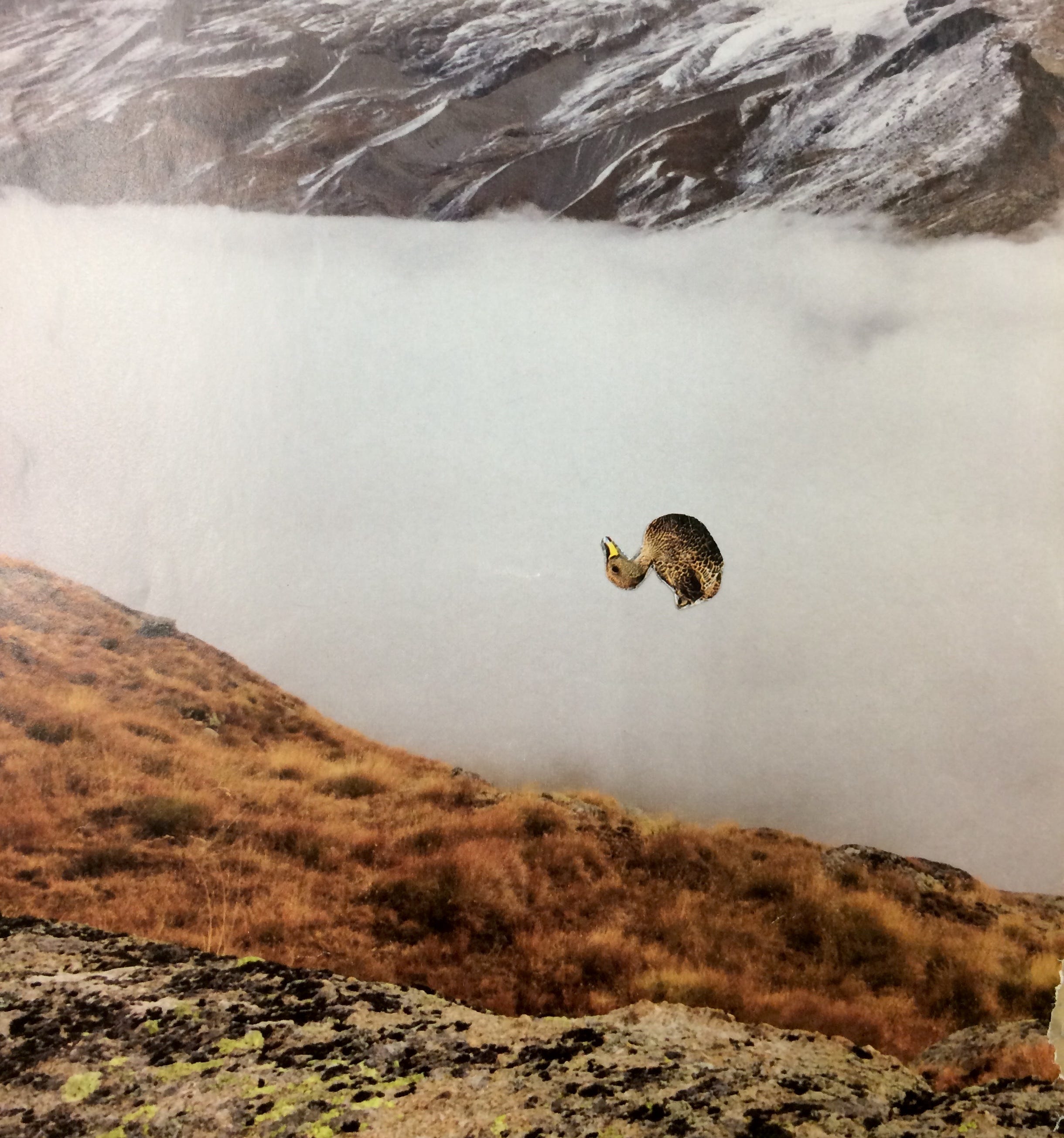
dear creators,
Have any of you noticed that once you realize how creativity flows without effort, you find yourself trying not to try? (Apologies if this wasn’t on your radar until now).
When I became aware of this absurd reflex, I also started noticing when not-trying came naturally to me. Often it’s at times when I’m quietly appreciating and handling some material, as if it’s all very special somehow but in no way in particular—that’s when I discover something unfamiliar and make clear decisions without trying.
Here’s an example: One of my favourite things to make solo or with all ages of students is what I refer to as a juxtaposition collage. Sometimes collage puts a sour taste in people’s mouths because they flashback to a school project that asked them to cut out a bunch of pictures that related to one another (in a rectangular format) and paste them on a page together. That’s not the kind of collage I’m taking about.
In this case, the first thing I want to do is hunt for images that stand out to me (in all kinds of magazines or discarded books, etc.). Now this is very important: I don’t have any plan whatsoever. Why? Because then I will tryyy to find images that match my idea or theme (which may be perfectly fine in another context).
My purpose at the beginning is to form a collection based on random impulsive choices of what I’m visually attracted to. I may choose based on subject, colour, texture, who knows? I don’t think about it. Once I have my collection, I refine it by making precise cuts. I don’t want to end up with rectangular images that remain self-contained. I want to juxtapose the images— meaning, I want to put things together in a way that’s unexpected.
If I asked you, “what is a rabbit’s favourite food?”, what’s the first answer that pops in your head? There’s a good chance that it’s ‘carrots’, yeah? My point is that we’ve all been conditioned to have similar responses and this shrinks and narrows our perception (and it can be tricky to bypass habitual knowing with intentional effort). In this particular collage practice, as soon as I start sliding a variety of images around on a surface in front of me, I come across fresh combinations without needing to strain in any way.
Here are some examples from students (ages 6-12yrs) who were in my class roughly eight to ten years ago:
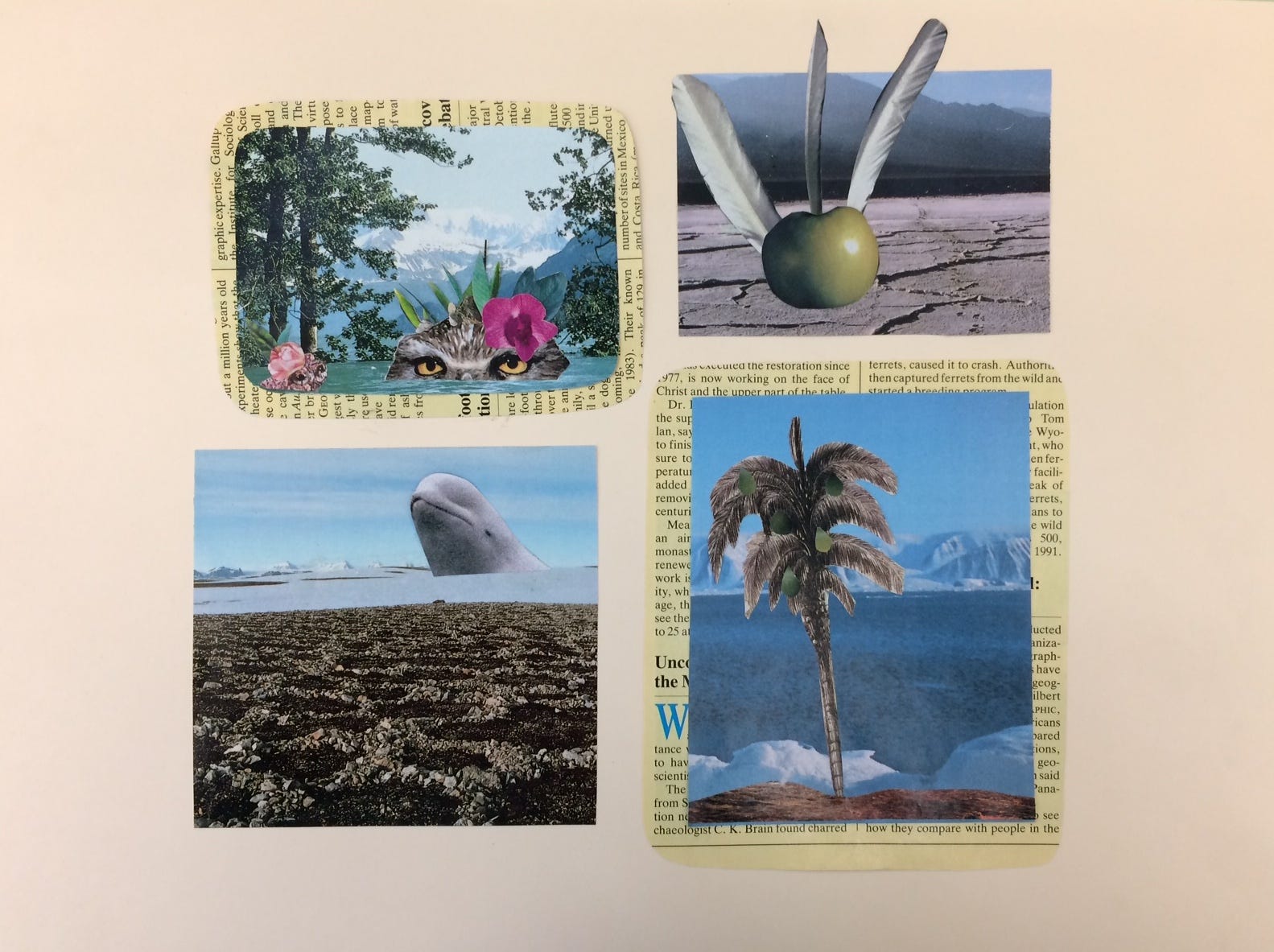
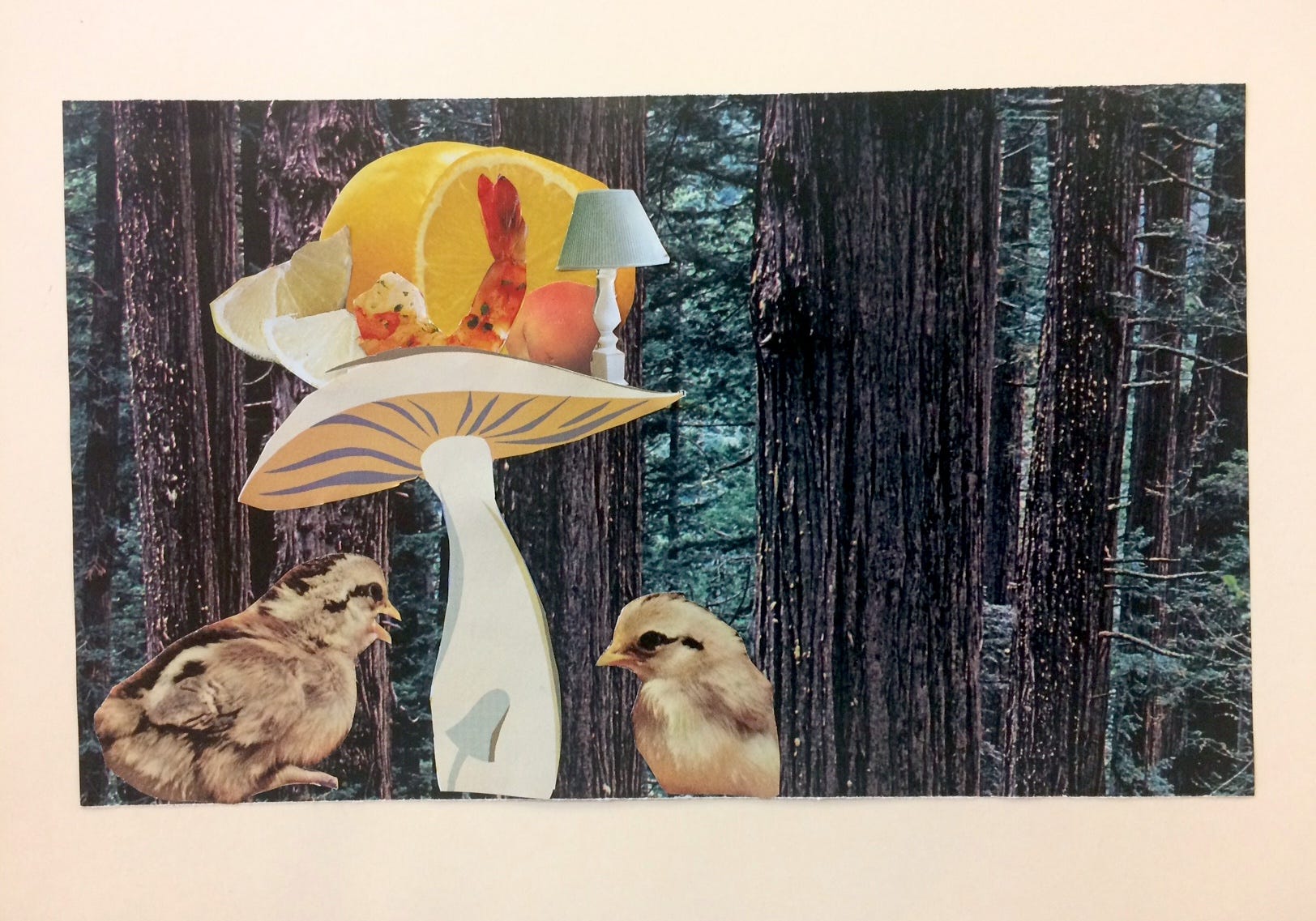
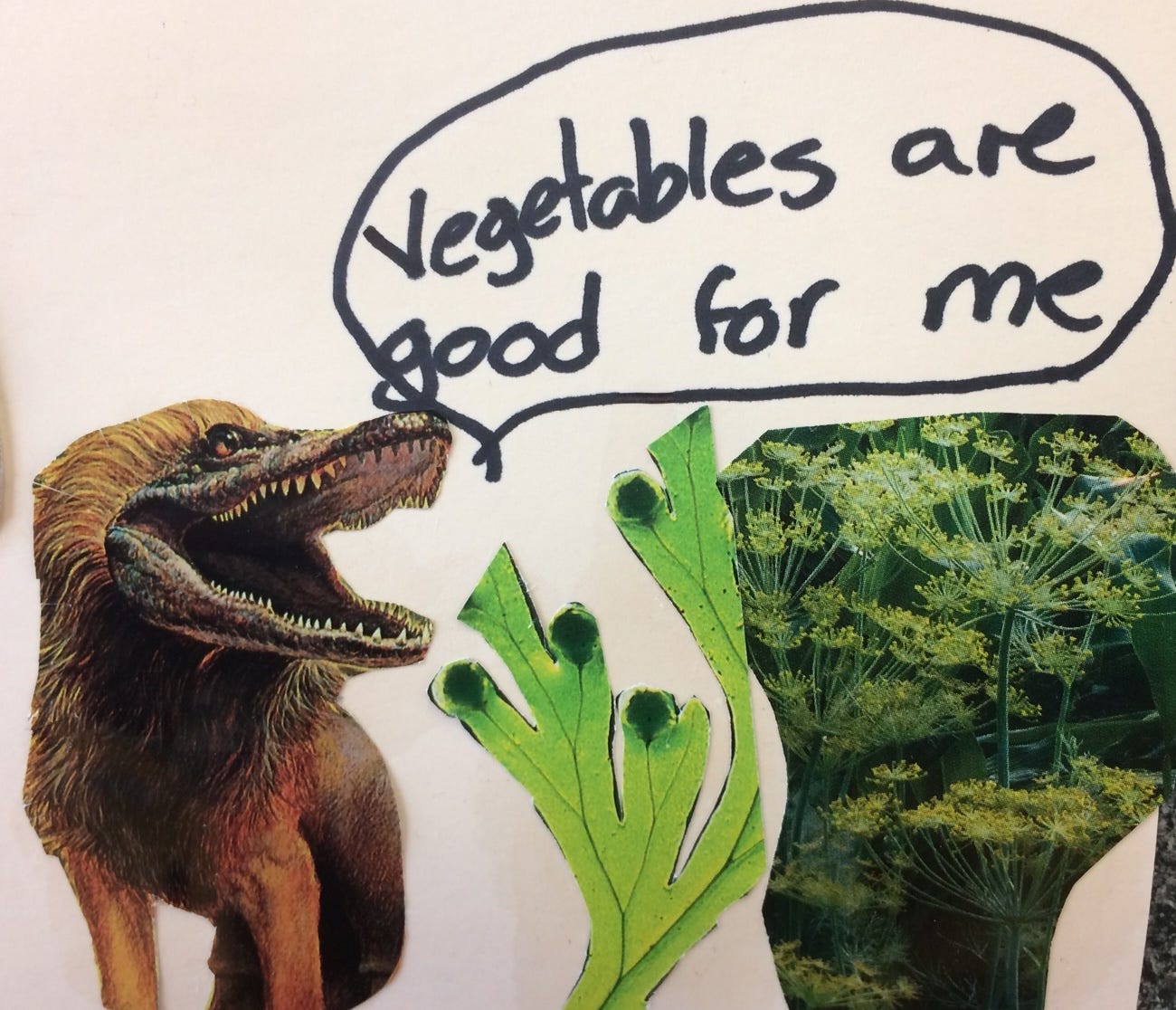
These three samples are pretty mellow. If you end up doing this with kids, be prepared for some very silly, dark, violent and sinister content. Any rules about ‘inappropriate’ subject matter are going to put a damper on free expression that otherwise has a good chance of leading to anxiety relief and connection with others.
Out of all the processes I engage students in, this is the one where a younger crowd bonds with each other immediately. Generally speaking, children have few opportunities to explore, vent and express their constant exposure to all kinds of violence and stress around them. We all need a safe space to air out the shadows we carry around with us. Quite naturally, children tend to do this in a healthy way with humour (as in the following:)
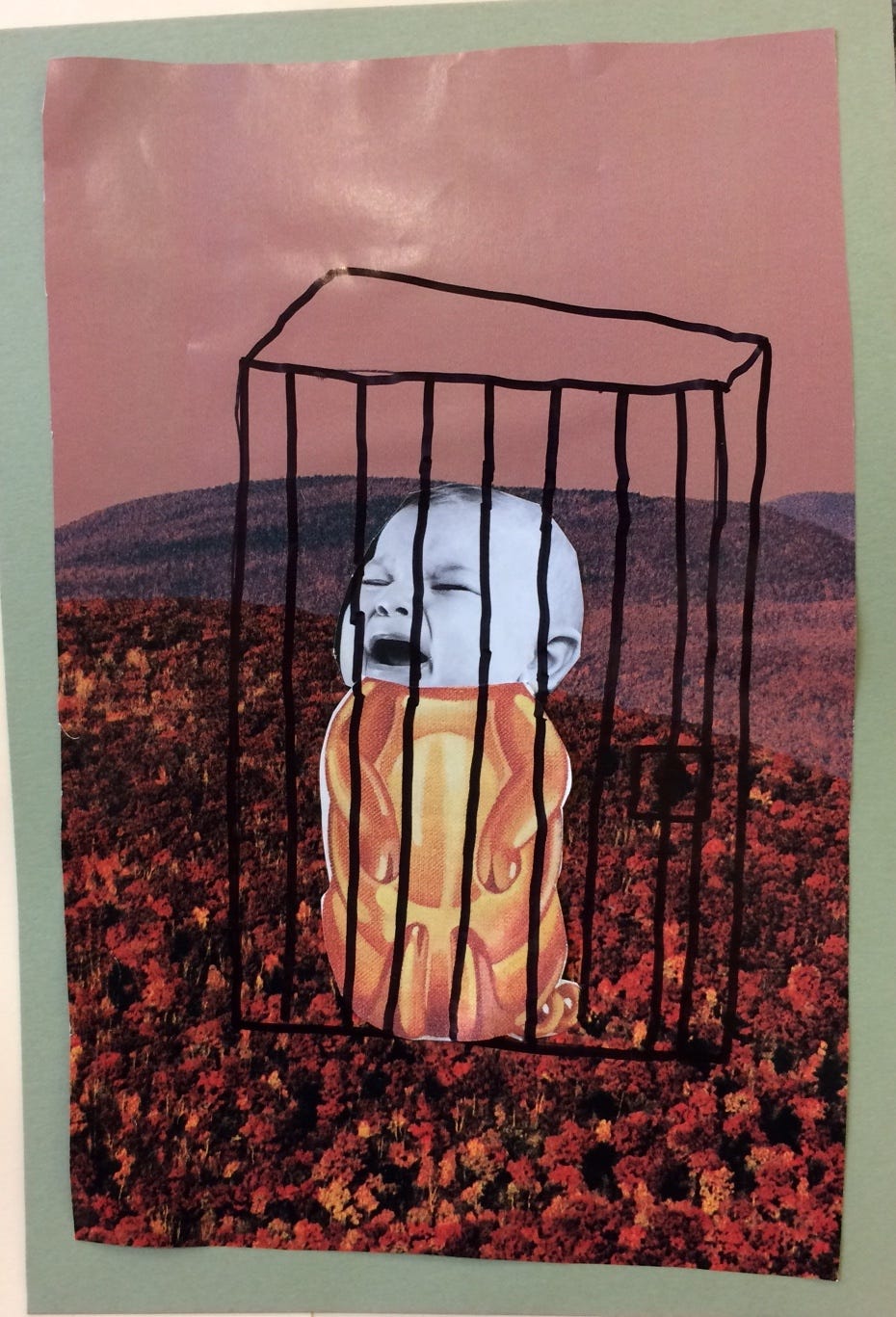
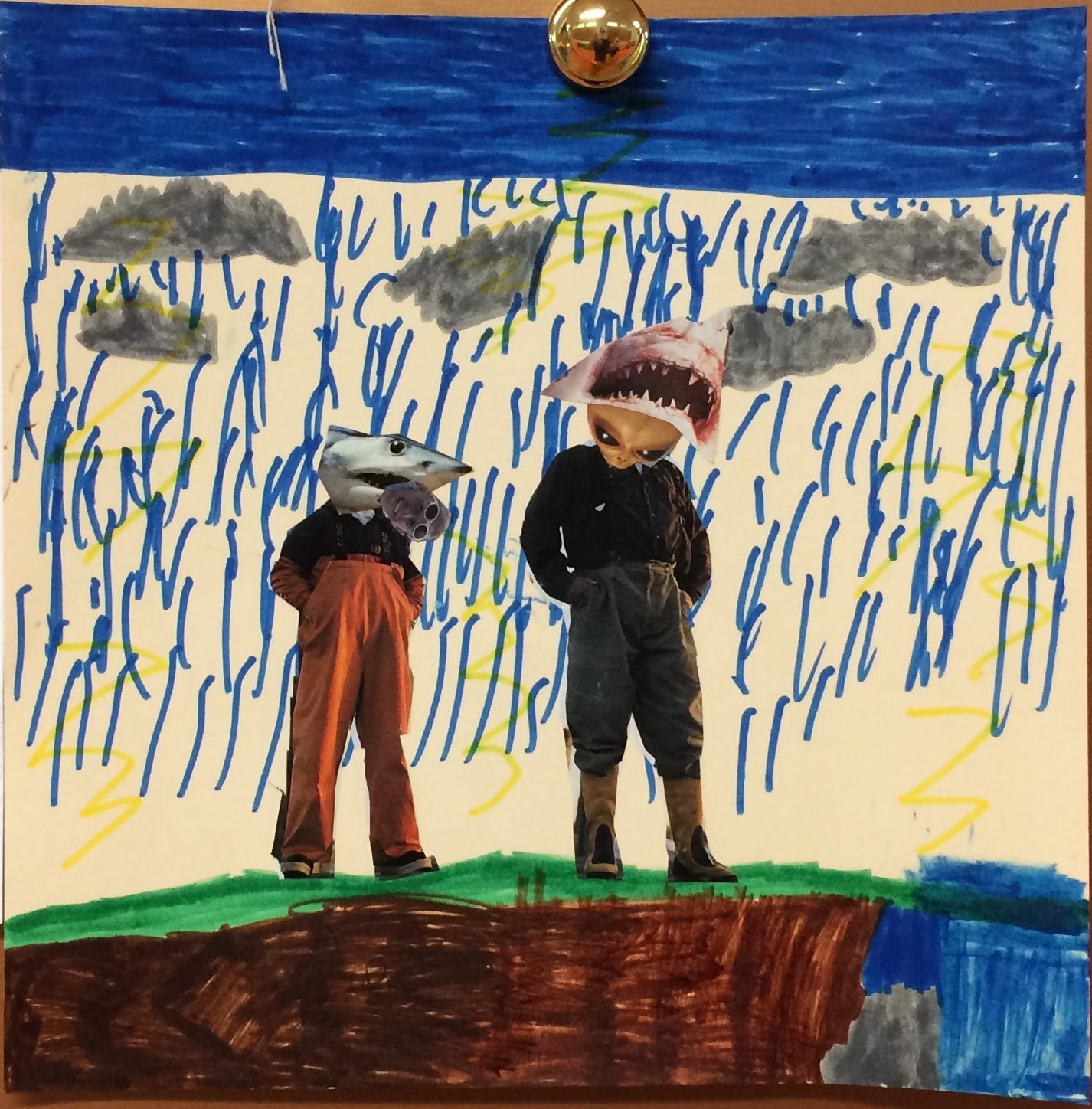
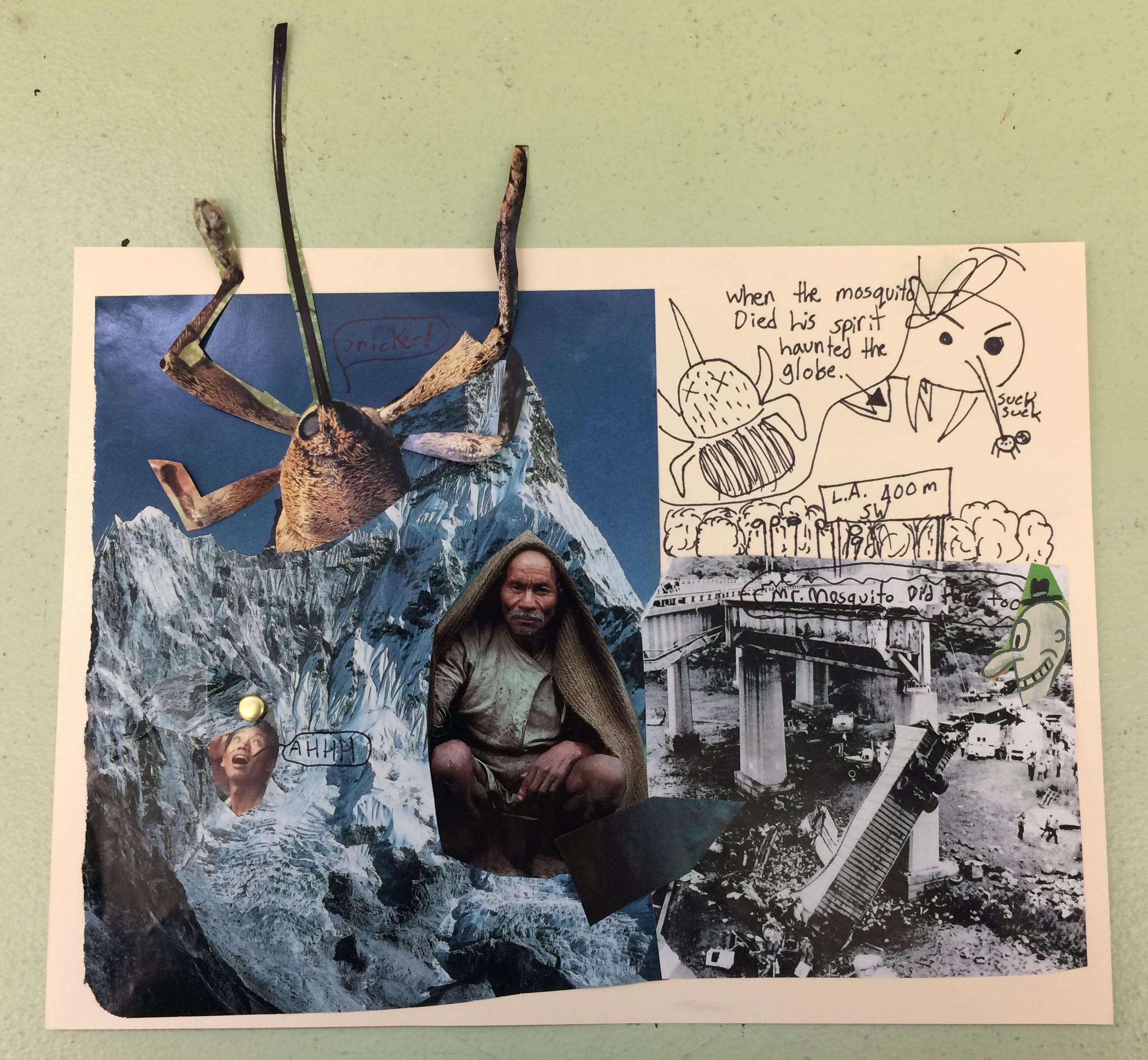
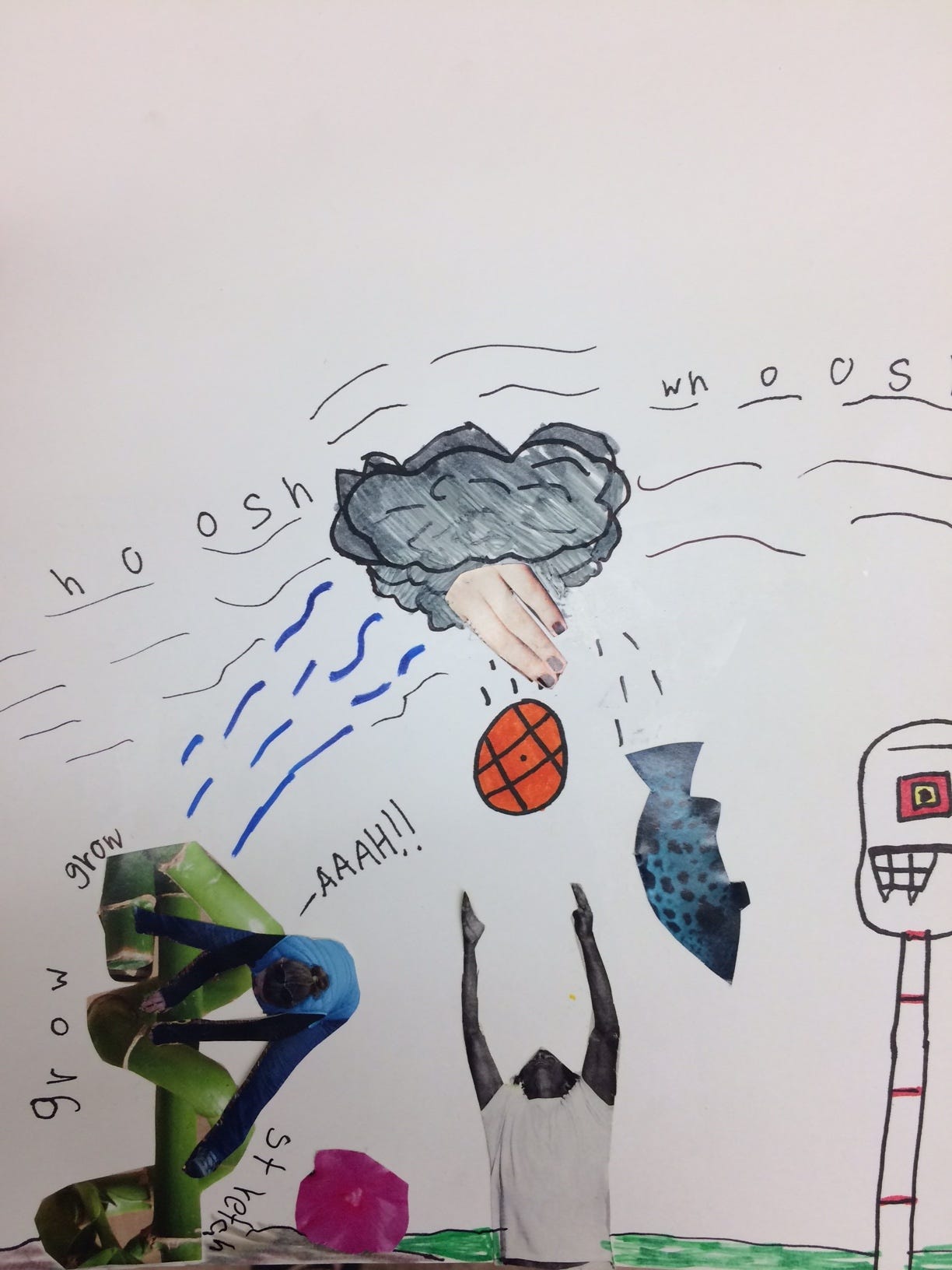
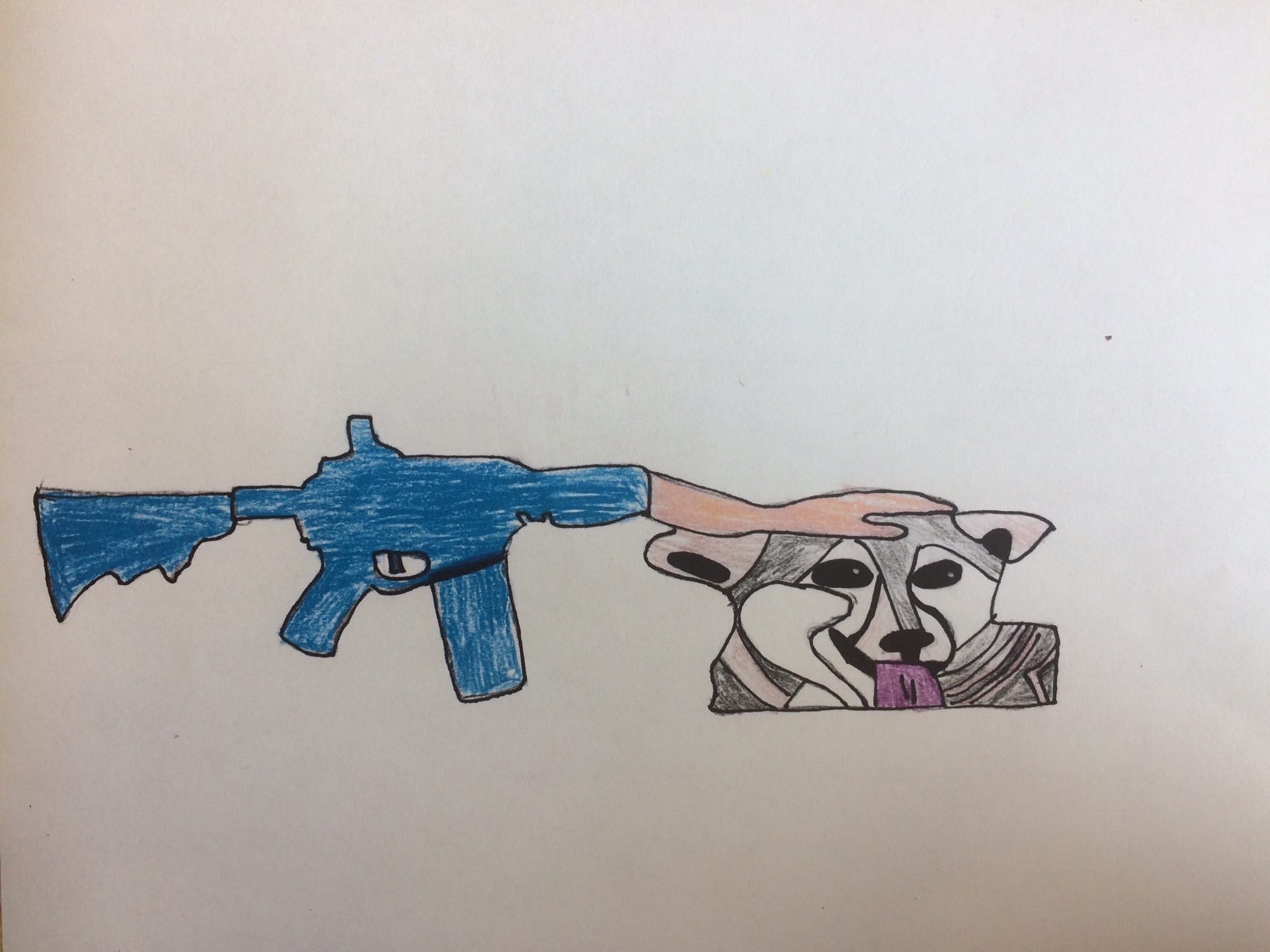
This next one below alarms some people at first but when I asked the student about it, I was told that it’s a gun that shoots friendly arms that like to pet dogs. Such a great juxtaposition!
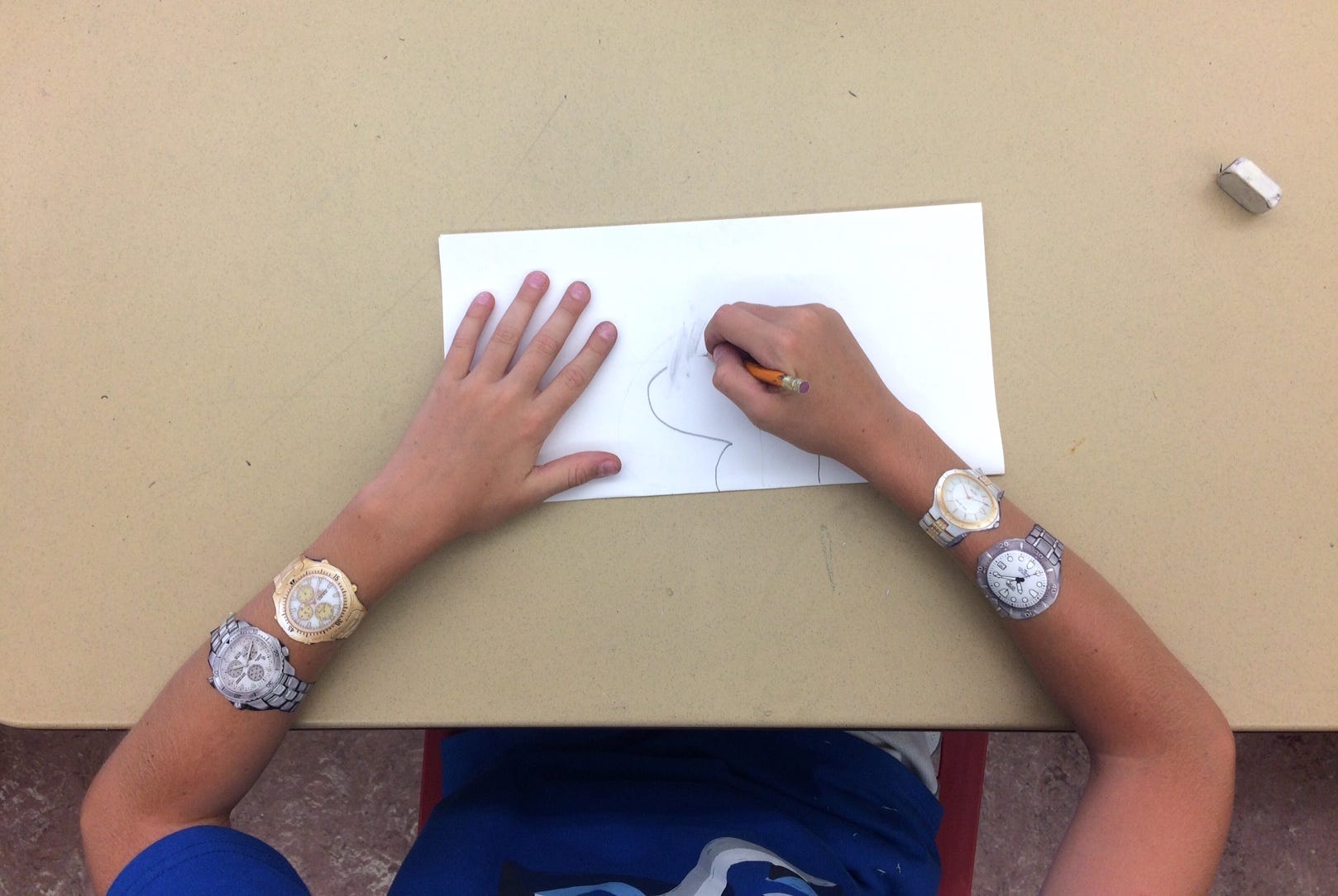
Though the sample below is not necessarily a juxtaposition in subject, I appreciate that it was an effortless decision to use his own body for the images he liked:
***
In my personal practice, I won’t always go through the process of making my own precise cuts. Sometimes it’s enough to take scraps of paper or magazine pages that already have cuts, and then I slide them over other pieces to see if anything aligns. I usually take photos of these and that’s the whole exercise. I may never do anything with these images. I’m simply becoming more familiar with not-trying.
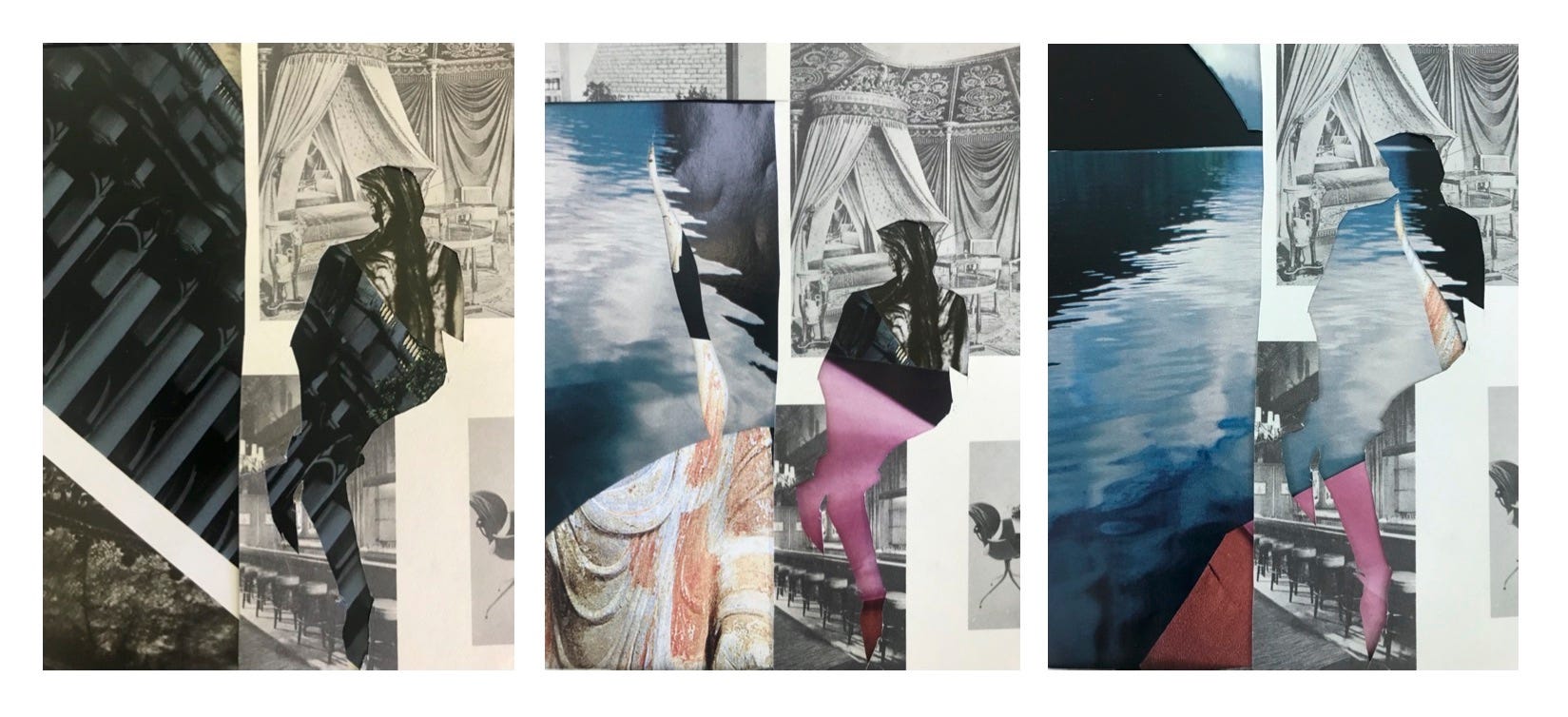
(The above triptych is the same negative cut of a figure that I found and slid over other scraps three different times)
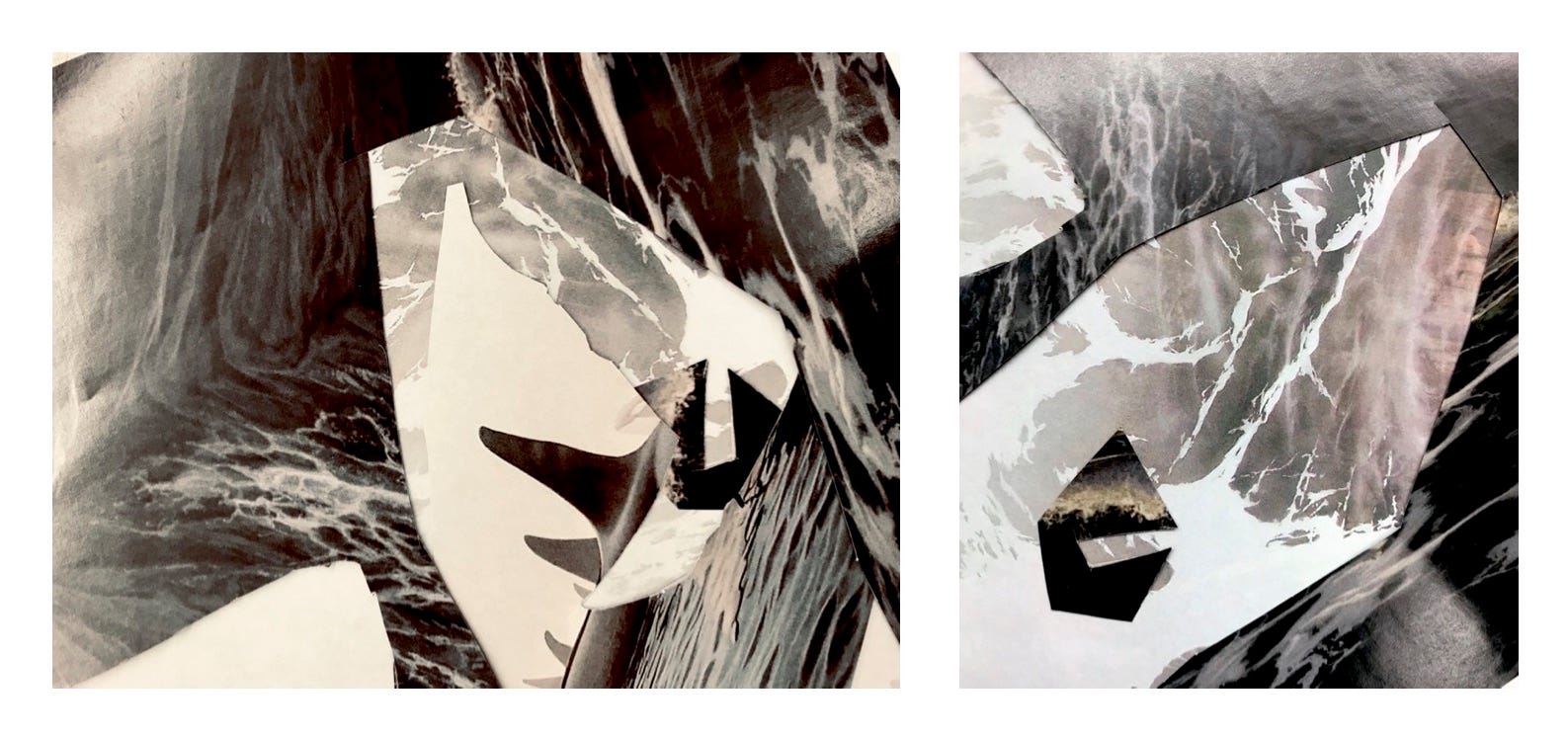
This collage format isn’t the only way I dial-down my efforting. I can usually create the necessary space so long as patience and trust are in the foreground — without these qualities I have a helluva time getting beyond trying not to try.
When I run after what I think I want,
My days are a furnace of distress and anxiety;
If I sit in my own place of patience,
What I need flows to me and without pain.
~Rumi
Beams to you all,
~Corrie