
Inspiration Through Vacancy
it could be more about a welcome loss than a gain

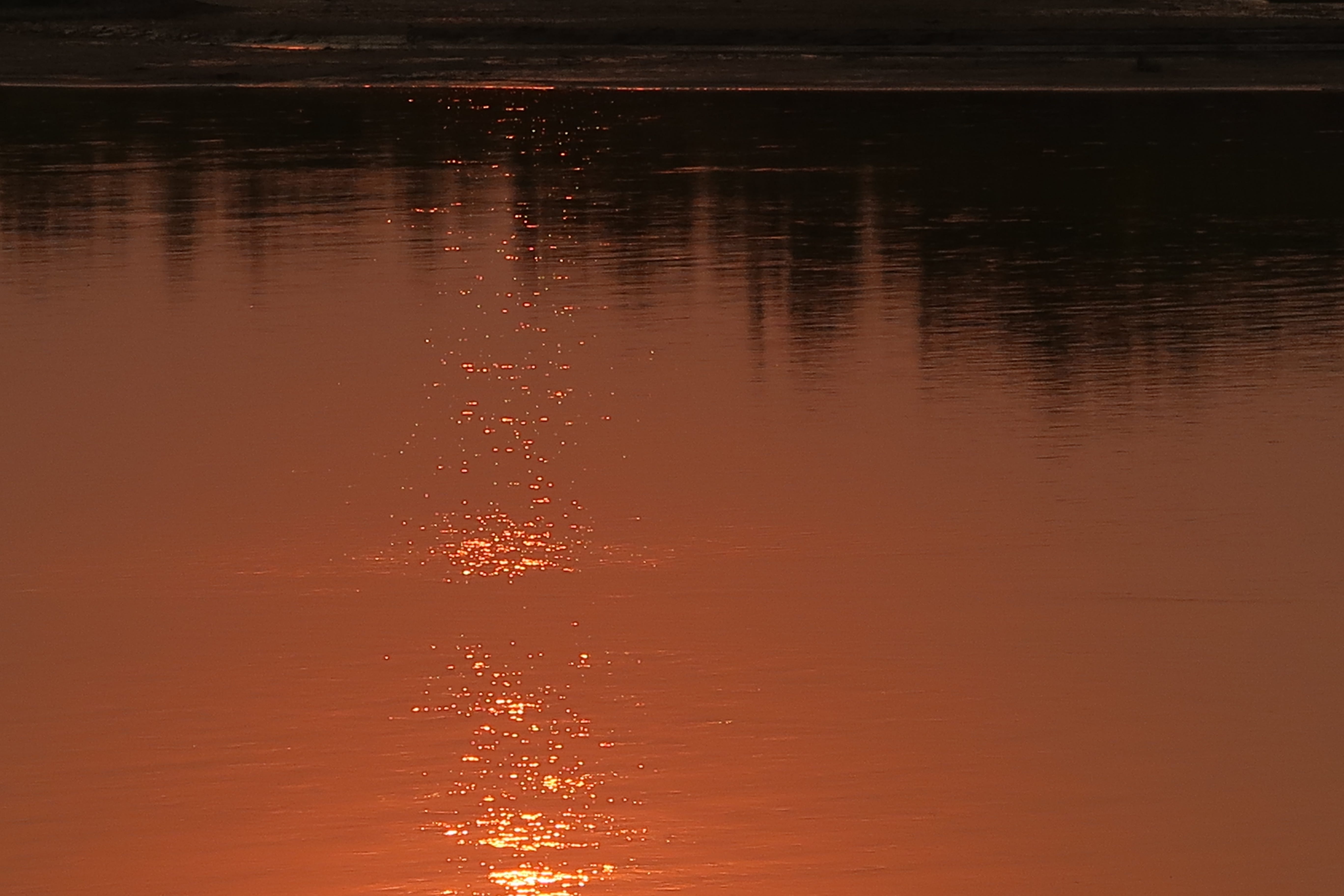
(Taking-in the autumn evening, Red Deer River, Alberta, Canada. September 2020)
dear creators,
Usually I find myself thinking of inspiration as if it’s something to acquire—like an experience that delivers a sudden pleasant amped feeling accompanied by charged expression (I’ve already written a fair bit about it here).
Lately, I’ve been recalling inspiration that felt more like a vacancy. These thoughts are probably flowing out of my constant nagging fatigue. Four hours after waking into my day, I seem to hit a wall— and I know I’m not the only one.
This sleepiness could actually be a natural way of being for this time of the year (rhythms of nature-wise) — but I also wonder if many of us have gotten so used to lugging around multiple sandbags of fear and worry that we’ve become unaware of all of the space that occupies and energy it burns through. How is inspiration supposed to make it through the clogs of our habitual inhibitions?
Let’s say we naturally collect all sorts of particular images, ideas, sounds, sensations etc. inside of us and that these have undergone a long incubation period. We have no clue what we’ve been sitting on until one of our daily obstructions is suddenly brushed aside. In this moment there’s a feeling of intense relief from our usual intolerable overload and all of the incubating material rushes through this vacancy (hopefully there’s some sorta instrument or mode of expression within reach).
The annoying thing is that our habitual inhibitions have a tendency to immediately re-form. It’s like standing in a swimming pool and parting the surface of the water with your arms to watch it quickly fill back in. I really appreciate how the vacancies show up by chance but is it possible to at least intentionally harness the occasional sea-parting?
I’ve mentioned the influence of mood, relaxation and not-knowing in several letters and I also wrote about the bliss that a landscape can offer us. Have you ever felt some relief while staring up at a clear starry sky or out across an open field or vast body of water? Can you recall an ‘Aha!’ at such a time?
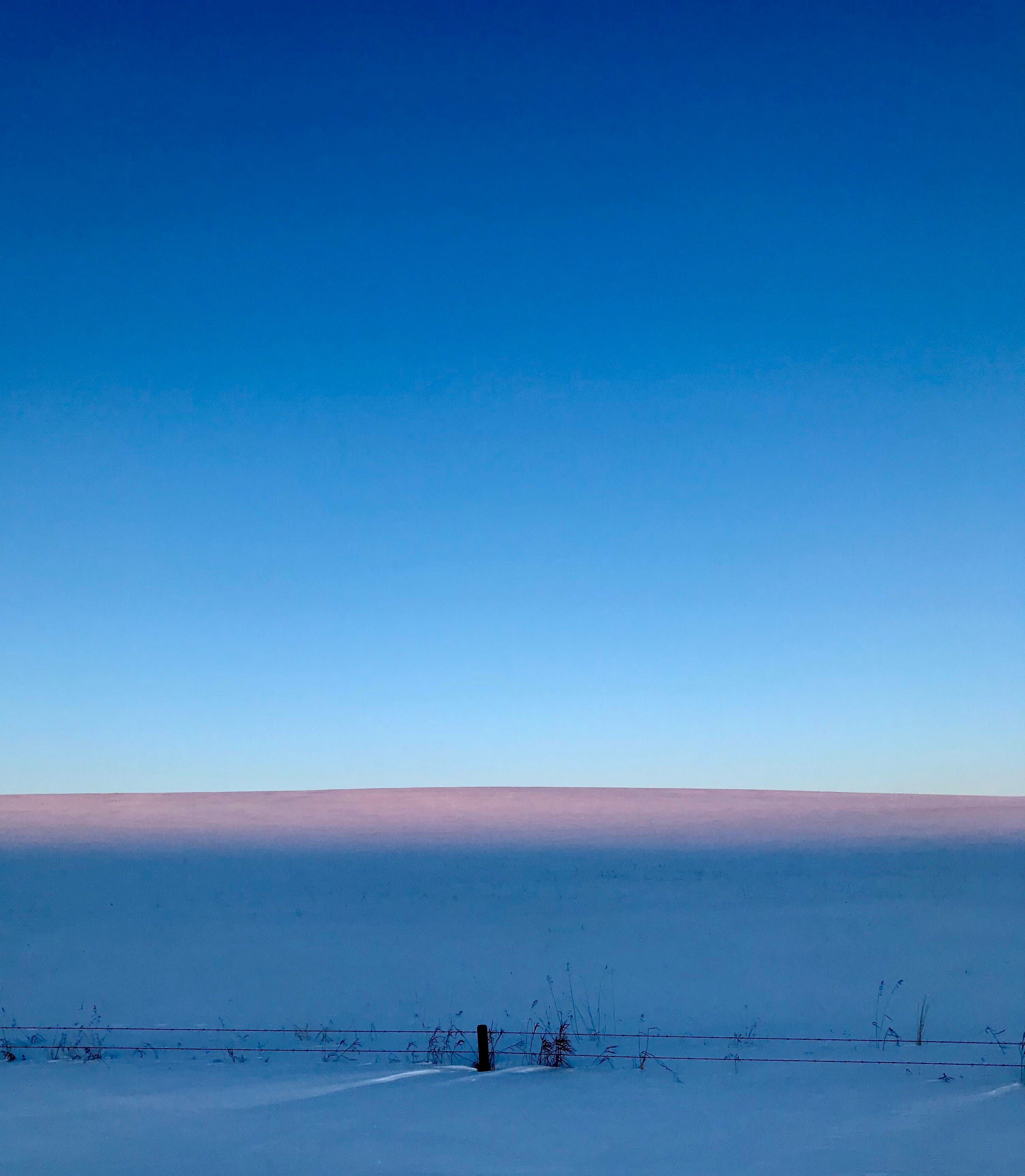
(West facing sunrise from my morning commute collection. 2019.)
Last week a friend told me about this article in Scientific American: The Brain Science of Elusive ‘Aha! Moments’; What happens in your mind when insight strikes? I consider insight and creativity to be in the same fam so I wasn’t surprised to be familiar with most of the scientific discoveries mentioned here. I appreciate that I was able to come to the same realizations through my creative practice—even if I don’t ever know what’s going on in my brain!
[I want to make a note that I’m not sharing this science as some way of backing my own personal research. I’m really curious about the field of science but I don’t look to it to necessarily prove anything that I’m interested in.]
This particular article is comparing insight to analytical thinking processes and tells us that,
“Analytical problem-solving recruits areas of the brain involved in “executive” processes such as “working” memory that rely on the brain’s frontal lobes. Virtually everyone can use either insightful or analytical methods, but many people tend to use one rather than the other.”
In one of the studies mentioned, it was discovered that,
“The subjects who relied mostly on insight had greater resting-state activity at the back of the brain, whereas the analytical subjects had greater activity in frontal areas. The frontal lobes, the seat of a person’s executive processes, organize activity in the rest of the brain. These executive processes enable people to think in a focused and strategic way, but they can also curb creativity by limiting thought to straightforward plans, just as a horse’s blinders block out distractions that would lead it to meander from its path. When frontal lobe activity is relatively low, as it was for the insightful subjects, posterior areas can be disinhibited and “go rogue,” sometimes resulting in aha! moments.”
I can only assume that someone reading this would wonder about being an analytical thinker or an insightful one. Even if we identify with one more than the other, I like to think we could all find a balance. In my teaching experience, people generally lean toward analytical-thinking (and some with considerable pride). I can’t help wondering if this one-sidedness is a person’s nature or something predominantly conditioned through experience and formal education.
Curiously, the article above makes a correlation between our mood and problem-solving style:
“In a 2009 study led by Karuna Subramaniam, then a doctoral student in Beeman’s lab at Northwestern University, researchers found that participants who reported feeling more positive solved more puzzles by insight, whereas those who reported greater anxiety solved more puzzles analytically.”
Despite how we might identify with or feel limited by our thinking processes, I want to get back to my question: is it possible to intentionally create a vacancy or absence from our habitual burden-state for inspiration/insight? This article acknowledges the benefit of an open-space:
“When you are in a large room or the great outdoors—under a starry sky, as Morgan was—your attention expands to take in the large space. That broadened awareness shifts the mind toward considering the whole rather than the parts, thereby enhancing insightful thinking. Filtering out the world around you can have a similar effect: aha! moments are often preceded by eye blinks and looking away from a problem to reduce distractions. People solve more thinking problems when they close their eyes. In contrast, objects that grab attention will narrow your focus on details and induce you to think analytically.”
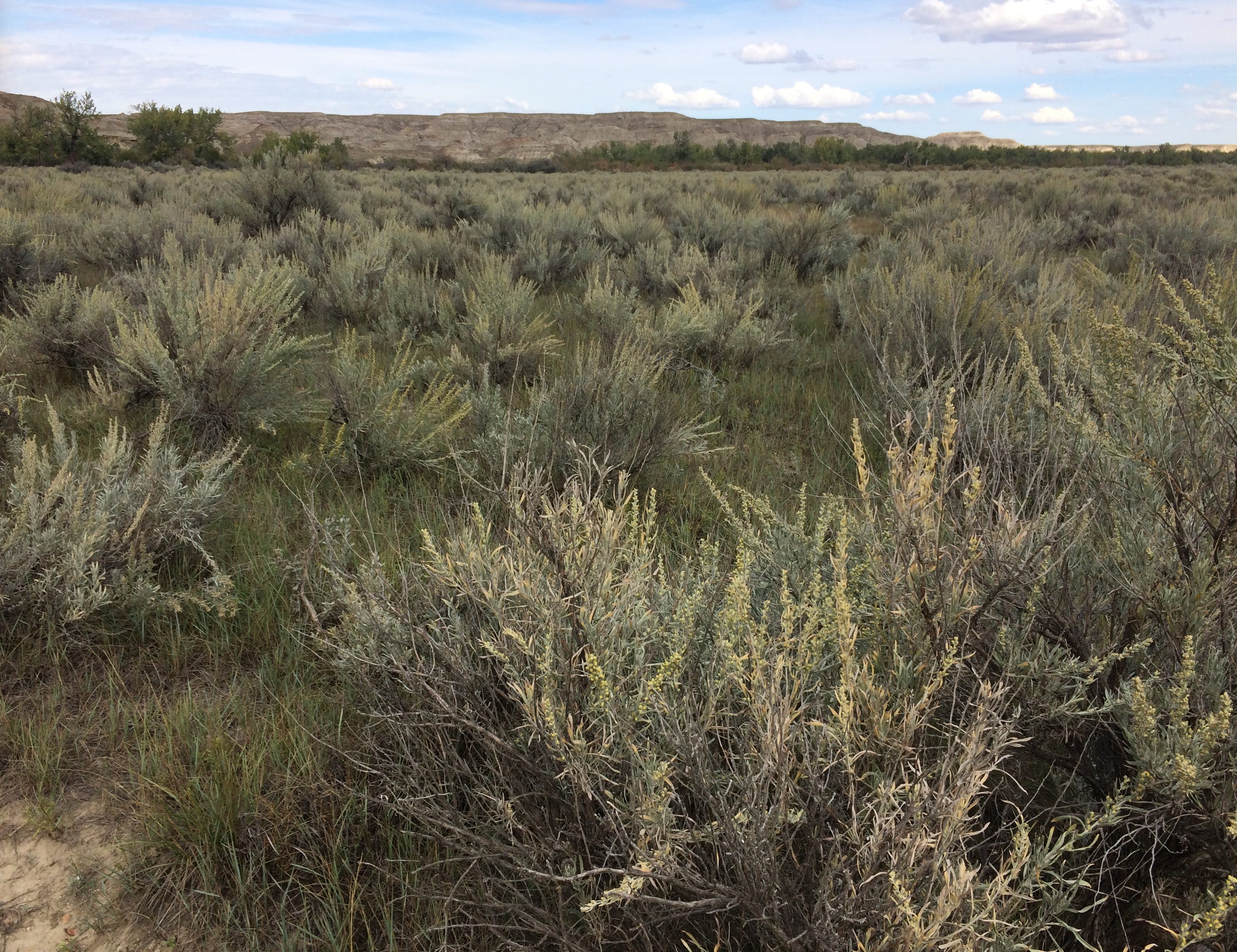
(Love this expanse at Dinosaur Provincial Park, Alberta, Canada. September 2019.)
Speaking of expanses, while at art school I became keenly aware of how much I love working alone in a large open area. I would book an entire classroom to myself in the late evening and spread all my materials and tools throughout the space. Sometimes I would be working on something pretty large-scale and other times I would sit in the middle of the floor to tinker with smaller things.
Until now I didn’t think about this preference as being integral to the expansion of my practice. I had only considered all the wandering I had done with my dog, Sadie-Pony, and how many things ‘clicked’ on these strolls.
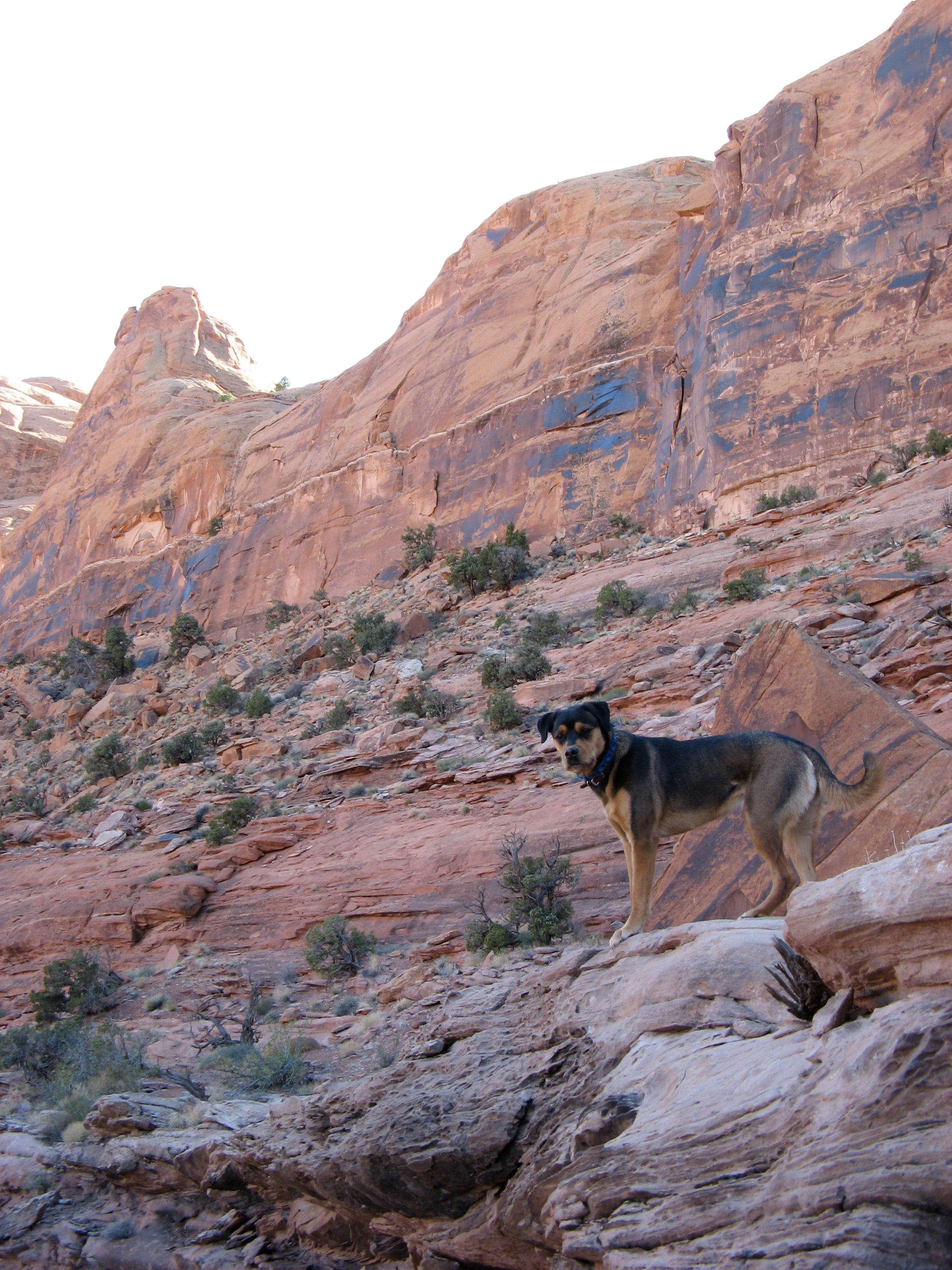
(With the Pony in Moab, Utah, USA. 2008.)
Acknowledging the complexity of every individual out there, I recommend whittling out some solitary time to take-in a large expanse. Unless that terrifies you. In that case— maybe part some water with your hands in the bathtub.
This may not be a gateway for everyone but it’s what I lean into when I catch myself hunting for inspiration and come up empty handed. At these times, I’m banking on a vacancy.
***
A song that just came to mind— from my favourite songwriter, Björk:
ALL IS FULL OF LOVE
You'll be given love
You'll be taken care of
You'll be given love
You have to trust it
Maybe not from the sources
You have poured yours
Maybe not from the directions
You are staring at
Twist your head around
It's all around you
All is full of love
All around you
All is full of love
You just ain't receiving
All is full of love
Your phone is off the hook
All is full of love
Your doors are all shut
All is full of love
All is full of love, all is full of love
All is full of love, all is full of love
All is full of love
All is full of love, all is full of love
All is full of love
All is full of love
All is full of love
All is full of love
Warmthness,
~Corrie